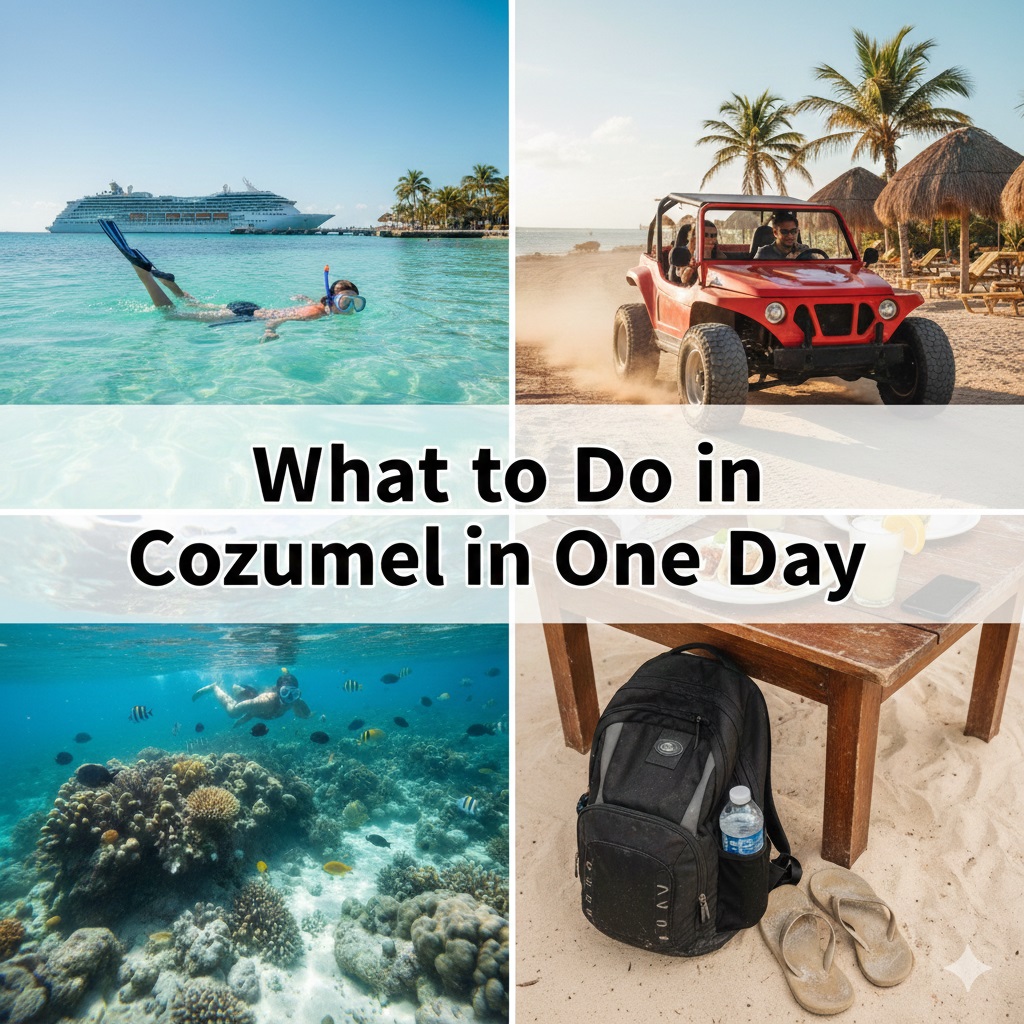
Yes. Cozumel is generally safe for tourists, including cruise passengers, families, couples, solo travelers, and first-time visitors to Mexico.
Most travelers spend their time around San Miguel de Cozumel, the cruise terminals, west-coast hotels and beach clubs, restaurants, dive sites, and established attractions where tourism infrastructure is concentrated.
That does not mean Cozumel is risk-free. The risks tourists are most likely to manage on the island are more specific than the broader safety concerns often associated with Mexico. In Cozumel, travelers should pay particular attention to ocean currents, scooter and road accidents, petty theft, unclear taxi or tour pricing, heat and dehydration, and isolated areas after dark.
Cozumel is also part of Quintana Roo, so official state-level travel advisories apply to the island. As of September 2026, the U.S. State Department lists Quintana Roo at Level 2: Exercise Increased Caution because of terrorism and crime. The current Mexico advisory was issued on May 29, 2026.
For most travelers, the useful question is therefore not simply whether Cozumel is safe. It is which risks matter in the places you plan to visit and how easily you can reduce them.
If this is your first trip to the island, our first-time Cozumel visitor guide covers arrival logistics, transportation, trip planning, and what to expect beyond safety.
Is Cozumel Safe to Visit Right Now?
For ordinary tourist trips, Cozumel remains a manageable destination with established hotels, restaurants, beach clubs, cruise facilities, taxis, dive operators, medical services, and organized attractions.
One reason the island feels different from mainland destinations is geography. Cozumel is physically separated from mainland Quintana Roo, and most visitors arrive through a limited number of entry points:
Cozumel International Airport, the passenger ferry terminal in San Miguel, Punta Langosta, International Pier, and Puerta Maya.
Tourism is then concentrated primarily around San Miguel and the western coastline.
That does not insulate Cozumel from crime or other travel risks, but it makes the typical tourist environment more geographically contained than a large mainland destination with extensive through-traffic.
For visitors, the most effective safety strategy is straightforward: know where you are going, plan how you will get there, check water conditions before entering the sea, use reputable operators, secure valuables, and clarify prices before accepting transportation or services.
What is the Current Travel Advisory for Cozumel?
Cozumel belongs to Quintana Roo, the same Mexican state as Cancun, Playa del Carmen, and Tulum.
The U.S. State Department currently advises travelers to Exercise Increased Caution in Quintana Roo because of terrorism and crime. Its state-specific guidance notes that violent incidents can occur and advises travelers to pay attention to their surroundings after dark and remain in well-lit pedestrian streets and tourist zones.
A Level 2 advisory is not a recommendation to avoid travel.
The State Department uses four advisory levels:
- Level 1 means exercise normal precautions.
- Level 2 means exercise increased caution.
- Level 3 means reconsider travel.
- Level 4 means do not travel.
The geographic distinction matters. An advisory covering the entire state of Quintana Roo does not mean conditions are identical in Cozumel, downtown Cancun, Playa del Carmen, Tulum, and less-developed areas of the state.
Travelers should nevertheless check the latest official advisory shortly before departure rather than relying on an article that may have been published months earlier.
The State Department also recommends considering the Government of Quintana Roo Guest Assist app for travel in Cozumel and elsewhere in the state. Guest Assist provides access to emergency information, legal guidance, tourist assistance, and help with issues such as lost passports and complaints against service providers.
[Safety information last reviewed: September 2026.]
Why Safety Varies Across Cozumel
Cozumel is not one uniform tourist environment.
San Miguel has busy commercial streets, restaurants, shops, ferry traffic, and a concentration of residents and visitors. The western shoreline contains most of the major hotels, beach clubs, snorkeling areas, and dive infrastructure. The eastern side faces the open Caribbean and is considerably less developed.
The type of risk therefore changes according to location.
A busy cruise terminal may create more opportunity for petty theft, rushed purchasing decisions, or pricing confusion. A quiet coastal road may present little crowd-related risk but greater concerns involving transportation, lighting, and access to help. A sheltered snorkeling area on the western side can have completely different water conditions from an exposed east-coast beach.
Thinking in terms of location + activity + time of day is more useful than labeling the entire island either safe or unsafe.
-
San Miguel de Cozumel
San Miguel is the island’s main urban and commercial center. Its waterfront, central plaza, ferry area, restaurants, shops, and nearby streets receive steady pedestrian traffic during the day and into the evening.
Normal urban precautions are appropriate. Keep control of phones, wallets, and bags, avoid displaying large amounts of cash, and remain aware of your surroundings in busy areas.
San Miguel is also one of the easiest parts of the island to explore without a vehicle because shops, restaurants, the waterfront, and many services are relatively concentrated.
-
Cozumel’s Cruise-Port Areas
Cozumel has three principal cruise terminals.
Punta Langosta is closest to downtown San Miguel. International Pier, sometimes called SSA International Pier, is farther south. Puerta Maya is immediately south of International Pier and handles many Carnival-associated arrivals.
All three serve large numbers of visitors and have substantial tourism infrastructure around them.
The main practical concerns are keeping track of belongings, understanding where your ship is docked, allowing enough time for the return journey, and confirming prices before agreeing to taxis, tours, or purchases.
Our guide to Cozumel’s three cruise ports explains the location and practical differences between Punta Langosta, International Pier, and Puerta Maya.
-
West Coast vs. East Coast Safety
The distinction between Cozumel’s western coastline and eastern, or windward, coast matters for both tourism infrastructure and water safety.
Most large resorts, dive operations, beach clubs, and established snorkeling areas are located on the western side. This coast faces toward mainland Mexico and includes many relatively sheltered water-access points.
The eastern side faces the open Caribbean Sea. Beaches there can experience stronger waves, surf, and currents, while services, lifeguard coverage, businesses, and immediate assistance are more limited.
That does not mean every east-coast beach is unsafe or every west-coast beach is safe.
Ocean conditions change with wind, weather, currents, and the exact shoreline. A picturesque beach is not automatically suitable for swimming.
The U.S. State Department specifically warns that beaches in Mexico can experience strong currents, rip currents, and rogue waves, including conditions dangerous to experienced swimmers. Travelers should take warning notices and beach flags seriously and remain out of the water when red or black flags are displayed.
Coastal exposure also affects where floating seaweed accumulates. If beach quality is important to your plans, check the latest guide tosargassum conditions in Cozumel before choosing which side of the island to visit.
Is Cozumel Safe at Night?
Cozumel is generally manageable after dark in established visitor areas, but transportation and location matter more at night than during the day.
Central San Miguel remains active around its restaurants, bars, waterfront, and commercial streets during the evening. Established hotels, beach businesses, and hospitality venues also have lighting, staff, and transportation access.
The situation changes on quieter residential streets, isolated stretches of road, and sparsely populated parts of the island.
A walk that seems easy during daylight may become less sensible once businesses close and pedestrian activity decreases.
For short distances through active parts of San Miguel, walking may be practical. For longer journeys, unfamiliar routes, or trips between coastal businesses and accommodation, using a taxi avoids unnecessary exposure.
The State Department’s Quintana Roo guidance similarly recommends paying attention to surroundings after dark and favoring well-lit pedestrian streets and established tourist areas.
If you plan to go out after sunset, our guide to Cozumel nightlife, bars, clubs, and live music can help you choose established evening venues and understand where nightlife is concentrated.
Crime and Petty Theft in Cozumel
Crime can occur in Cozumel, and it should neither be exaggerated nor dismissed.
Serious violent incidents occur within Quintana Roo, which is one reason travelers should monitor official government guidance. For ordinary visitors moving through established Cozumel tourism areas, however, opportunistic loss or theft of belongings is a more practical day-to-day concern.
Phones, wallets, bags, cameras, and other valuables are easier to lose or steal when left unattended on a beach, restaurant chair, scooter, golf cart, or open vehicle.
Beach visits deserve particular attention because travelers often enter the water while leaving personal belongings behind. Take only what you need and use lockers, secured storage, or another responsible person when available.
Avoid carrying your passport around unnecessarily once it is securely stored. Keeping a separate digital copy can also be useful if the original is lost.
Transportation Safety in Cozumel
Getting around Cozumel is generally straightforward, but the safest option depends on distance, time of day, driving experience, and how much independence you need.
-
Are Taxis Safe in Cozumel?
Yes. Taxis are widely used between San Miguel, cruise terminals, hotels, beach clubs, restaurants, and attractions along the west coast.
The main issue for visitors is usually fare clarity rather than personal safety. Confirm your destination and price before the ride begins. At cruise terminals, hotels, and established attractions, staff can usually direct you to normal taxi pickup areas.
For longer trips after dark or routes outside central San Miguel, a taxi is often safer and easier than walking.
-
Taxi Fares and Overcharging
Pricing misunderstandings are more common than serious taxi-related safety issues.
Before entering the vehicle, confirm:
- the total fare
- whether the price is in MXN or USD
- whether the quoted amount is per vehicle or per person
- whether waiting time or extra stops cost more
Avoid assuming the fare will be metered. If the price is unclear, ask before departure rather than disputing it at the destination.
-
Is It Safe to Rent a Scooter in Cozumel?
Scooters can be practical for experienced riders, but they carry more physical risk than taxis or cars.
Travelers without prior scooter or motorcycle experience should avoid learning on vacation. Riders should wear a properly fitted helmet, stay sober, reduce speed in rain or sand, and leave extra braking distance.
Easy navigation does not make scooter riding low-risk.
-
Are Golf Carts and Rental Cars Safe in Cozumel?
Yes, when used carefully.
Golf carts should be treated as road vehicles, not recreational toys. Drivers should secure passengers, stay alert to faster traffic, and avoid distracted driving.
For rental cars, inspect the vehicle before leaving, understand the insurance coverage, clarify fuel and return conditions, and avoid leaving visible valuables inside.
Night driving requires more caution outside developed areas because lighting can be limited and scooters, cyclists, pedestrians, or road hazards may be harder to see.
If your only goal is to reach one beach club, restaurant, or attraction and return, a taxi may be simpler than renting a vehicle.
Tourist Scams and Pricing Confusion in Cozumel
Most tourist scams in Cozumel involve unclear pricing, rushed purchases, or misunderstood services rather than elaborate fraud.
Cruise terminals and the ferry area attract businesses competing for newly arrived visitors. A sales pitch is not automatically suspicious, but travelers should avoid paying for a service they do not fully understand.
Before booking a tour or making a larger purchase, confirm:
- what is included
- the final price
- whether the amount is in MXN or USD
- cancellation or refund terms
- transportation and return arrangements
Timeshare and promotional presentations may also be offered in high-tourism areas. Clarify what is being offered before giving personal information, money, or a significant amount of time.
The simplest rule is to confirm the service, currency, and total cost before paying.
Is Cozumel Safe for Cruise Passengers?
Yes. Cozumel is exceptionally accustomed to cruise tourism and receives large numbers of passengers through defined terminals.
For cruise visitors, one of the biggest preventable problems is not crime but poor time management.
Independent exploration means you are responsible for returning to the ship before all-aboard time. Avoid itineraries requiring several distant stops or uncertain transfers when your ship has a short port call.
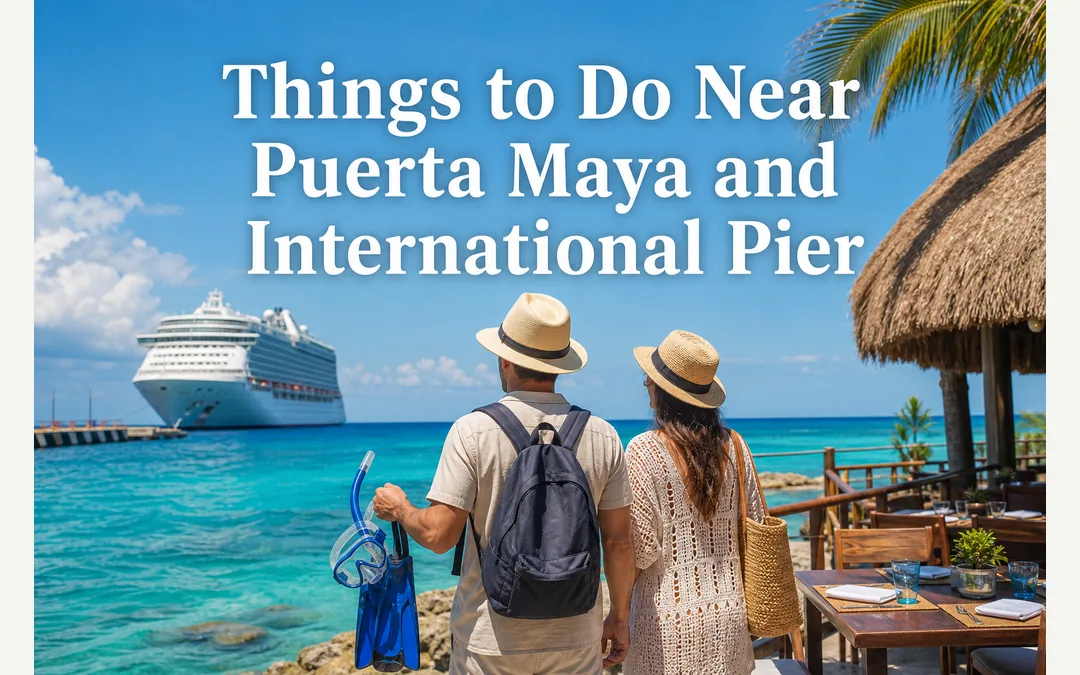
Passengers docking at Puerta Maya or International Pier are already close to much of the southern west-coast tourism corridor. Our guide to activities near Puerta Maya and International Pier can help you avoid unnecessary cross-island travel.
Travelers also commonly wonder whether to book with the cruise line or independently. Cruise-sponsored excursions generally offer stronger logistical protection around ship schedules, while reputable local operators may provide smaller groups, different experiences, or more flexibility. Our comparison of independent excursions and cruise-ship tours explains the trade-offs.
Whatever you choose, build a genuine return buffer rather than planning to reach the pier at the last possible minute.
If you have only a short port call and want to minimize transfers, this four-hour Cozumel beach-day itinerary shows how to structure a simple shore day around realistic timing.
Is Snorkeling in Cozumel Safe?
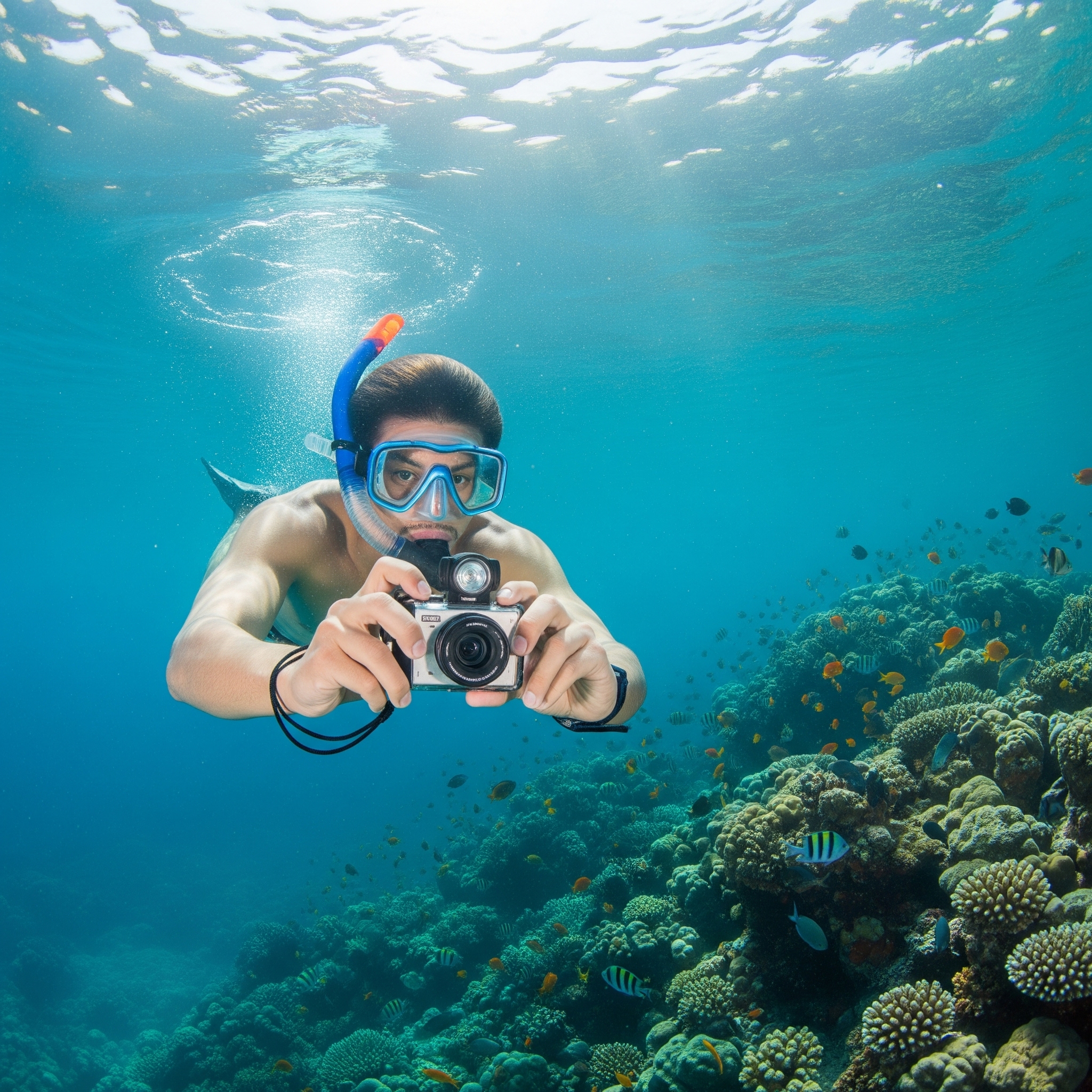
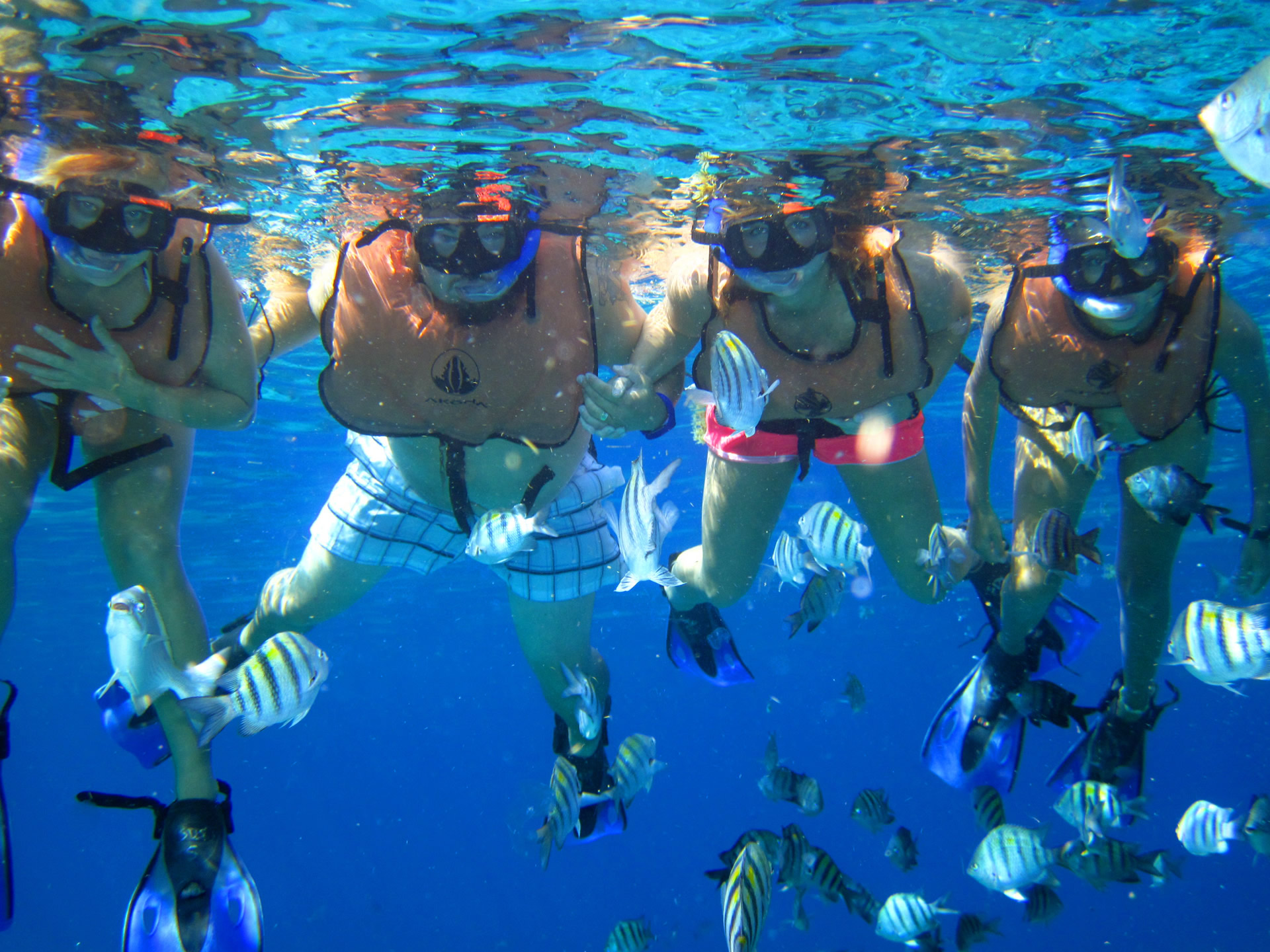
Snorkeling in Cozumel is generally safe when the site, weather, current, equipment, and swimmer’s ability are appropriate.
Clear Caribbean water can create a false sense of security. Visibility is not the same thing as calm water, and a current may be significant even when the surface looks inviting.
The western coastline includes many established snorkeling areas and professional operators. Beginners benefit from controlled entry points, properly fitted masks and fins, flotation when appropriate, and clear instructions about where they should enter and exit.
Boat traffic is another consideration. Swimmers should stay within designated or operator-approved snorkeling areas rather than moving into active boating channels.
The most important decision is based on current conditions that day, not a beach’s general reputation.
Our dedicated Cozumel snorkeling safety guide goes deeper into currents, equipment, water entries, reef rules, beginner considerations, and common hazards.
Once those fundamentals are clear, compare beginner-friendly snorkeling spots in Cozumel to choose a site that matches your swimming ability rather than choosing only by appearance.
Ready to Get in the Water?
Sunset Cozumel offers guided snorkeling, SNUBA, scuba experiences, and other marine activities from the island’s west coast. Explore our Cozumel water activities and choose an experience appropriate for your comfort and skill level.
Is Scuba Diving in Cozumel Safe?
Cozumel is internationally known for drift diving, where divers use the natural current to move along the reef instead of repeatedly swimming against it.
When conditions, training, and dive planning are appropriate, this can produce excellent dives. It also means that certification level and current experience matter.
Beginners should dive with qualified professionals at sites appropriate to their training. Deeper walls, stronger-current locations, overhead environments, and advanced profiles require different levels of skill.
Divers should disclose relevant medical information, listen to the briefing, stay within certification limits, monitor depth and air supply, and avoid choosing a site simply because more experienced members of a group are comfortable with it.
Cozumel dive sites range from relatively accessible reefs to deeper walls and wreck diving. Our guide to the best scuba-diving sites in Cozumel covers locations including Paradise Reef, Palancar Gardens, Santa Rosa Wall, Columbia Reef, and the C-53 wreck so divers can compare conditions and experience requirements.
Travelers should also check whether their medical or travel insurance covers scuba diving and emergency evacuation at the depths and certification levels they intend to use.
Is Cozumel Safe for Solo Travelers?
Cozumel can work well for solo travelers because many activities are centered on identifiable tourism zones rather than requiring extensive movement across a large metropolitan area.
A solo visitor can structure a trip around accommodation, central San Miguel, staffed beach clubs, restaurants, organized excursions, and professional dive or snorkeling operations.
The main advantage is logistical simplicity, not immunity from risk.
Control your transportation, tell someone where you are going when exploring farther from populated areas, avoid unnecessary isolated walking after dark, and keep your phone charged.
Joining an organized activity can also simplify transportation, equipment, timing, and emergency planning for someone traveling alone.
Is Cozumel Safe for Solo Female Travelers?
Many women visit Cozumel independently, but normal solo-travel precautions still matter.
Use established transportation, remain aware of your drink, avoid sharing unnecessary personal or accommodation information with strangers, and leave any situation that feels uncomfortable.
For evening travel beyond central, well-used areas, arrange transportation rather than relying on long walks.
A staffed hotel, established tour operator, dive center, restaurant, or beach club also provides a clear point of assistance should something go wrong.
The goal is not to travel fearfully; it is to remove avoidable uncertainty from transportation, nightlife, and isolated locations.
Is Cozumel Safe for Families With Children?
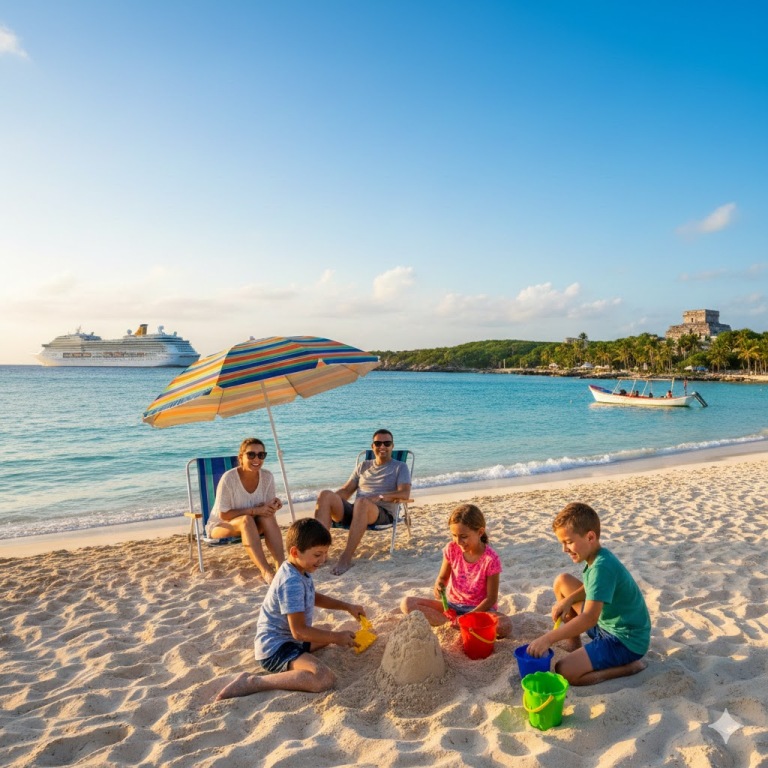
Yes, but family safety depends heavily on choosing activities that match a child’s age, swimming ability, heat tolerance, and comfort in the water.
Not every beach has the same entry conditions, and not every snorkeling location suits young or inexperienced swimmers.
Before booking a water activity, ask about depth, current, flotation devices, entry method, supervision, and minimum age requirements.
Heat is another practical factor. Children can become dehydrated before they clearly communicate that they are uncomfortable. A day that combines shade, drinking water, food, restrooms, and limited transfers is often easier than repeatedly moving between exposed outdoor sites.
For age-appropriate trip ideas beyond the safety considerations here, see our guide to things to do in Cozumel with kids.
Is the Drinking Water Safe in Cozumel?
Visitors should generally drink bottled or properly purified water rather than untreated tap water.
Hotels, established restaurants, beach clubs, and other tourism businesses commonly provide purified drinking water, but travelers can ask when they are unsure.
Food safety is similarly about choosing businesses with reasonable hygiene practices, proper food handling, and normal customer turnover.
Ice at established tourist businesses is commonly produced from purified water, although visitors who are uncertain can confirm with the venue.
The objective is not to avoid eating locally. It is to distinguish treated drinking water and reputable food handling from untreated sources.
Heat, Sun and Dehydration
The tropical environment can create safety problems even when nothing else goes wrong.
Cozumel’s combination of strong sun, humidity, beach time, boat trips, and alcohol can accelerate dehydration. Drink water throughout the day rather than waiting until you feel intensely thirsty.
Time in the sea does not remove sun exposure. Snorkelers and boat passengers may actually underestimate UV exposure because wind and water make the air feel cooler.
Use shade, suitable clothing, and appropriate sun protection. When participating in marine activities, follow any environmental requirements established by the marine park, venue, or operator regarding the products permitted in the water.
Alcohol deserves particular caution around swimming, boating, scooters, and driving because it can compound risks associated with heat, judgment, balance, and dehydration.
What to Do in an Emergency in Cozumel?
Mexico uses 911 as its national emergency number. It can connect callers with police, ambulance, fire, or civil-protection services and operates nationwide.
For non-emergency tourist support, Mexico also provides 078, which offers travel assistance and can help connect visitors with services such as hospitals, embassies, transportation information, and other official resources.
The U.S. State Department lists Cozumel among Mexican destinations with tourist-assistance infrastructure and recommends the Quintana Roo Guest Assist service for travelers in the state.
Before leaving home, save your insurer’s assistance number, accommodation details, emergency contact information, and a digital copy of your passport somewhere you can access even if your wallet is lost.
For a serious medical situation, call 911 rather than spending critical time trying to determine the ideal clinic yourself.
If a passport is lost or stolen, contact the relevant embassy or consular service and use Guest Assist or tourist-assistance resources for local guidance. If an incident involves theft or fraud, obtain documentation that may be required by authorities or your insurer.
What Should Tourists Avoid in Cozumel?
Most preventable problems come from a relatively small number of decisions:
- Avoid entering the sea when currents, weather, beach flags, or local warnings indicate unsafe conditions.
- Do not make Cozumel the place where you learn to ride a scooter for the first time.
- Never combine impaired driving or scooter use with alcohol.
- Keep valuables with you or secured rather than unattended on a beach or in an open vehicle.
- Confirm taxi fares, tour inclusions, prices, and currency before accepting a service.
- Avoid unnecessary long walks through isolated areas after dark when transportation is readily available.
- Cruise passengers should not build itineraries with no realistic return margin.
- Never assume water conditions on Cozumel’s exposed east coast will resemble the more sheltered western side.
These precautions address risks a traveler can actually influence without turning the trip into an exercise in constant vigilance.
Is Cozumel Safer Than Cancun or Playa del Carmen?
No destination can be meaningfully labeled universally safer without considering where someone stays, what they do, when they travel, and how they move around.
Cozumel does, however, have structural differences that can make a tourist trip simpler.
It is an island rather than part of an extensive mainland urban corridor. Much of its visitor activity is concentrated around San Miguel, cruise terminals, the western shoreline, reefs, and marine attractions.
Cancun and Playa del Carmen also have heavily visited tourist areas, but they are connected to much larger mainland road networks and surrounding urban regions.
For travelers primarily interested in diving, snorkeling, beaches, food, and relaxed evenings, Cozumel can involve fewer complicated movements during an ordinary day.
That does not cancel the Quintana Roo travel advisory or make Cozumel crime-free. It explains why the practical visitor experience on the island may differ from what someone imagines after reading generalized safety discussions about the Mexican Caribbean.
If diving is part of your decision, compare scuba diving in Cozumel, Cancun, and Playa del Carmen to see how reef access, dive conditions, and overall experience differ between the three destinations.
Hurricane Season and Severe Weather
Cozumel lies within the Atlantic hurricane region.
The official Atlantic hurricane season runs from June 1 through November 30, although storms are not evenly distributed across that entire period.
A hurricane does not need to make direct landfall on Cozumel to affect a vacation. Tropical systems can disrupt ferry crossings, cruise itineraries, flights, snorkeling, diving, boat tours, and beach access.
Travelers visiting during storm season should monitor official forecasts and understand airline, hotel, tour, and cruise change policies.
Marine conditions may also deteriorate before weather becomes severe on land, so boat operators or authorities can cancel water activities even when the day does not initially appear dangerous.
Our Cozumel hurricane-season guide explains seasonal timing, historical patterns, cruise disruption, and how storms can affect marine activities.
Is Sargassum Dangerous in Cozumel?
For most visitors, sargassum is primarily a beach-condition and trip-planning issue, not one of Cozumel’s major personal-safety risks.
Cozumel’s western coast can be less exposed to major accumulations than east-facing parts of the Mexican Caribbean because the island itself changes how some wind and current patterns reach shore.
Conditions still vary by season, weather, and location.
Heavy accumulations can make a beach less suitable or enjoyable for swimming and can produce an unpleasant odor as seaweed decomposes. Travelers with respiratory sensitivities may prefer to avoid shorelines experiencing substantial buildup.
For current seasonal patterns, affected areas, and east-versus-west coast differences, see our guide to sargassum in Cozumel.
Do You Need Travel Insurance for Cozumel?
Travel insurance is not a substitute for sensible planning, but it can matter when a normal problem becomes expensive.
Policies may cover medical treatment, evacuation, trip interruption, baggage loss, or weather-related changes depending on the terms.
Travelers planning scuba diving, SNUBA, boating, scooter rentals, or other adventure activities should specifically check exclusions rather than assuming all recreational activities are automatically covered.
The U.S. State Department recommends travel insurance for Mexico and specifically advises travelers to consider medical evacuation coverage.
Read the policy before the trip, not after an incident.
Final Verdict – Is Cozumel Safe for Tourists?
Cozumel is generally a safe and manageable destination for tourists who use normal destination-specific precautions.
Its compact geography, established tourism economy, cruise infrastructure, west-coast activity corridor, and concentration of organized marine tourism make many trips straightforward.
The most useful precautions are specific rather than dramatic.
Monitor the current Quintana Roo advisory. Confirm taxi and excursion prices. Treat scooters as real vehicles rather than vacation toys. Check ocean conditions before swimming or snorkeling. Keep valuables secure at beaches. Use transportation rather than making unnecessary isolated walks after dark. Give yourself enough time to return to your ship.
Cozumel should not be described as crime-free, and official warnings should not be minimized. At the same time, travelers do not need to assume that every risk mentioned in a state-wide or Mexico-wide advisory applies equally to every visitor situation on the island.
A better approach is to understand the actual risk attached to your location, activity, and time of day, then plan accordingly.
Plan a Simpler Cozumel Day
If you want to reduce transfers and keep your beach and water activities in one west-coast location, Sunset Cozumel combines marine experiences, facilities, food, and shoreline access.Contact Sunset Cozumel to plan the part of your visit that fits your group, experience level, and time ashore.
Cozumel Safety FAQs
Is Cozumel safe for American tourists?
Yes. Cozumel receives large numbers of U.S. visitors, and there is no separate advisory instructing Americans to avoid the island. U.S. travelers should follow the current State Department guidance for Quintana Roo, which is presently Level 2: Exercise Increased Caution, and apply the transportation, nighttime, water, and theft precautions relevant to their plans.
Is it safe to walk around Cozumel?
Walking is generally practical in central San Miguel and other active pedestrian areas during normal visitor hours. Longer walks outside developed areas can become uncomfortable because of heat, road design, limited sidewalks, distance, or lower pedestrian activity. After dark, transportation is preferable for unfamiliar or isolated routes.
Is the ferry from Playa del Carmen to Cozumel safe?
Yes. The Playa del Carmen–Cozumel ferry is a widely used tourist route. Travelers should use official ferry operators, secure valuables, follow crew instructions, and expect possible delays or rough crossings during poor weather.
Are ATMs and credit cards safe to use in Cozumel?
Yes, when used carefully. Choose ATMs inside banks, hotels, or established businesses, protect your PIN, avoid standalone street machines when possible, and check whether prices and card charges are listed in MXN or USD.
Are mosquitoes and dengue a concern in Cozumel?
Mosquitoes can transmit dengue in Quintana Roo. Travelers should use insect repellent, wear protective clothing when mosquitoes are active, and reduce exposure around standing water, especially during warm and rainy periods.
Are pharmacies in Cozumel safe for tourists?
Established pharmacies are widely available in Cozumel, but travelers should buy medication only from reputable licensed pharmacies. Avoid unverified sellers and consult a medical professional when prescription treatment or diagnosis is required.
Is Cozumel safe for older travelers or people with limited mobility?
Yes, but accessibility varies. Older travelers should consider heat, uneven sidewalks, pier distances, boat access, and water-entry conditions. Taxis, accessible venues, and pre-planned excursions can reduce unnecessary physical strain.
Reference Sources
- U.S. Department of State – Mexico Travel Advisory
https://travel.state.gov/en/international-travel/travel-advisories/mexico.html - Visit Mexico – Emergency Information
https://visitmexico.com/en/pagina/emergencias - Government of Quintana Roo – Guest Assist
https://guestassist.mx/ - Sunset Cozumel – Supporting destination and safety guides
Travel advisories and local conditions can change. Check official sources before departure.