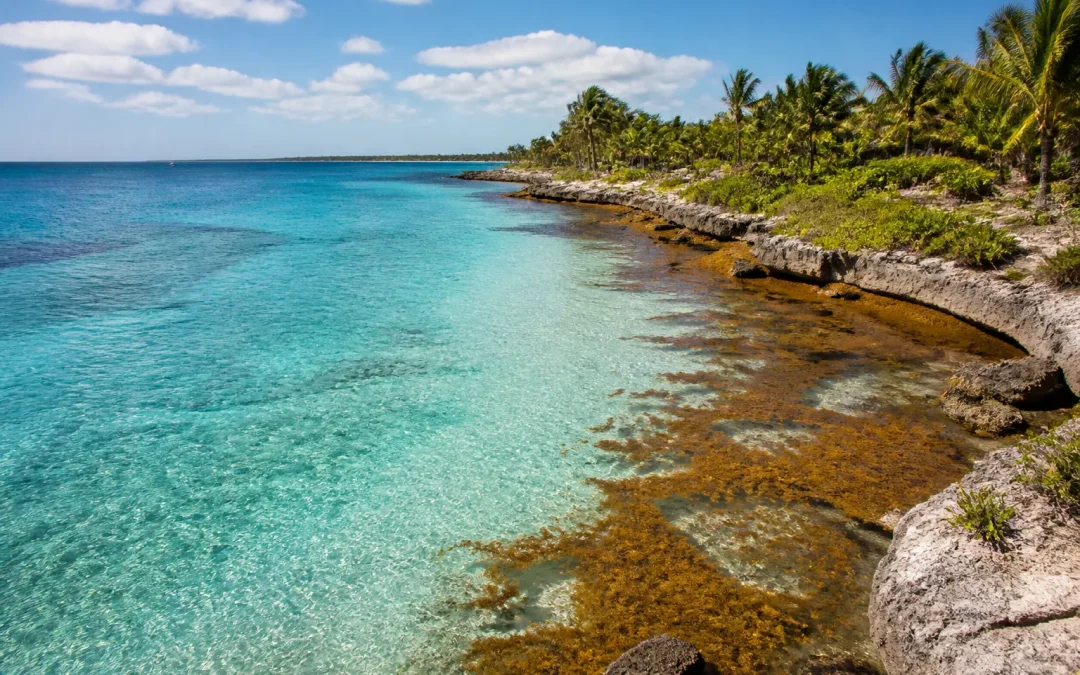
Last updated: October 13, 2026
Planning a trip to Cozumel and worried about sargassum seaweed ruining your beach days, snorkeling plans, or scuba diving excursions?
Here’s some good news: Cozumel’s west coast generally experiences less sargassum than its exposed eastern shoreline. That means even when seaweed accumulates on one side of the island, other beaches may offer much better conditions.
However, sargassum levels change throughout the year, and 2026 has been another unusually active season across the wider Caribbean.
This guide explains the latest Cozumel sargassum conditions, which beaches typically have the least seaweed, what to expect during each month, and how to plan your trip without unnecessary surprises.
Is There Sargassum in Cozumel Right Now? (October 2026 Update)
Quick answer: Yes, sargassum is still present in parts of Cozumel in October 2026, but recent monitoring indicates that many western beaches have little or no reported accumulation. Some exposed eastern beaches may experience more seaweed, so conditions should be checked by location rather than for the entire island.
Latest verified reports:
- September 30, 2026: The University of South Florida (USF) reported that sargassum abundance across the wider Atlantic belt had declined to approximately half its August level, after a similar decrease between July and August. However, the western Caribbean had not experienced the same decline as other regions.
- October 9, 2026: An independent monitoring report classified 8 of 10 monitored Cozumel beach areas as clear or having minimal sargassum. Chankanaab and Playa Palancar were among the locations reporting minimal accumulation.
- October 11, 2026: A subsequent regional monitoring report again classified 8 of 10 monitored Cozumel areas as clear or having minimal sargassum.
- October outlook: USF expects the overall regional decline to continue potentially through November, although shoreline arrivals may still occur.
These reports describe specific observation dates and broader scientific trends. They are not live measurements of every Cozumel beach.
Where should you go? Start by checking west-coast locations such as Chankanaab, Playa San Francisco, and Playa Palancar. Confirm the latest conditions with a local beach club, hotel, or water-activity operator before visiting.
Latest information: USF Sargassum Watch System · Mexican Navy monitoring reports · October 9 beach monitoring report
This section is updated monthly. The historical seasonal information below remains applicable for general travel planning.
Which Part of Cozumel Has Less Sargassum?
If avoiding sargassum is your main priority, Cozumel’s west and southwest coasts are usually your best options.
The reason comes down to geography.
Cozumel sits off Mexico’s Yucatán Peninsula, separated from Playa del Carmen by the Cozumel Channel. Its eastern coastline faces the open Caribbean Sea, where floating sargassum can arrive with winds, waves, and ocean currents.
The western coastline faces the mainland and is comparatively sheltered from these incoming accumulations.
As a result, heavy sargassum on an eastern beach doesn’t necessarily mean you’ll encounter the same conditions at a beach club, snorkeling site, or dive location on the western side.
Here’s the typical difference:
| West and Southwest Coast | East Coast | |
|---|---|---|
| Sargassum exposure | Generally lower | Generally higher |
| Coastal setting | Faces the mainland | Faces the open Caribbean |
| Water conditions | Often more sheltered | More exposed to surf |
| Popular activities | Snorkeling, diving, beach clubs | Scenic drives, photography, natural beaches |
These are typical patterns rather than guarantees. Unusual winds and currents can occasionally bring seaweed into sheltered locations.
Best Beaches in Cozumel to Avoid Sargassum
Several popular beaches benefit from the western coastline’s geographical advantage.
1. Playa Palancar
Located on Cozumel’s southwestern coast, Playa Palancar is known for its relaxed beach atmosphere and access to snorkeling excursions near the Palancar reef system.
It generally has lower exposure to incoming sargassum than east-facing beaches.
Recent October monitoring also classified Playa Palancar as having minimal sargassum, making it a reasonable option to check when planning a beach day.
2. Chankanaab Beach Adventure Park
Chankanaab lies on the western coast and offers managed facilities, snorkeling access, and activities for families.
Its relatively sheltered location helps reduce exposure to sargassum arriving from the open Caribbean.
Third-party observations from October 9 indicated minimal seaweed at Chankanaab, although visitors should verify current conditions and admission details.
3. Playa San Francisco
Playa San Francisco is a popular southwest-coast destination known for beach clubs and recreational facilities.
Its location generally makes it less vulnerable to major sargassum accumulation than exposed eastern beaches.
An October 10 monitoring observation reported minimal sargassum here, providing a useful recent reference for travelers.
4. Sunset Cozumel’s Western Shoreline
For travelers who want to enjoy Cozumel’s marine life without spending an entire day on a sandy beach, western shore-snorkeling locations offer another option.
Sunset Cozumel is situated on Carretera Costera Sur at kilometer 3.2, overlooking the western coastline.
Visitors can combine guided shore snorkeling with waterfront dining, subject to suitable marine conditions.
Explore our guided shore snorkeling experience in Cozumel to learn more about the available activities.
Which Cozumel Beaches Get the Most Sargassum?
Cozumel’s eastern beaches face the open Caribbean and generally experience greater exposure to incoming seaweed.
Some locations worth monitoring include:
- Punta Morena: Known for its scenic coastline and surf. A third-party observation from October 10 reported moderate sargassum accumulation.
- Playa Ixpalbarco: Another exposed coastal location. An October 10 monitoring observation classified sargassum as abundant, showing that significant local arrivals were still possible despite the wider regional decline.
- Chen Río: A popular eastern beach area where substantial accumulation can occur. On July 19, 2026, the Municipality of Cozumel reported removing approximately 15 tons of sargassum during a major cleanup involving around 600 participants.
- Playa Bonita: An exposed eastern location where sargassum conditions can vary with changing winds and currents.
These beaches remain valuable for coastal scenery and sightseeing, but swimming suitability depends on seaweed accumulation, surf, currents, and local guidance.
For travelers primarily interested in snorkeling, our guide to the best snorkeling spots in Cozumel explains how different shore-access locations compare.
When is Sargassum Season in Cozumel?
Sargassum season in Cozumel generally becomes more active from March through October, with the greatest potential for seaweed arrivals during late spring and summer.
November through February usually have lower regional sargassum activity, although occasional arrivals can occur throughout the year.
The seasonal pattern provides a useful planning guide, but it doesn’t predict exactly how much seaweed will be present at an individual beach.
Here’s what to expect month by month.
Cozumel Sargassum in January
January generally falls within the quieter part of the annual sargassum cycle.
Large shoreline accumulations are typically less common than during the summer months.
However, January 2026 was unusually active across parts of the Caribbean, demonstrating that even winter can bring unexpected increases in floating sargassum.
Travelers should also consider winter cold fronts, which can create rough marine conditions independently of seaweed.
Cozumel Sargassum in February
February typically has relatively low sargassum activity, but offshore quantities can begin increasing as spring approaches.
Localized arrivals remain possible, particularly along the eastern shoreline.
For visitors traveling in February, the west coast generally remains the more sheltered choice, although recent beach observations should still be checked.
Cozumel Sargassum in March
March is a transitional month when floating sargassum commonly becomes more abundant across the Caribbean.
As offshore quantities increase, the potential for seaweed reaching Cozumel’s exposed eastern beaches also rises.
Visitors planning snorkeling and beach activities should begin monitoring regional forecasts more frequently.
Cozumel Sargassum in April
By April, the Caribbean sargassum season is often well underway.
Floating mats can move toward coastal areas, leading to increased accumulation depending on local winds and ocean circulation.
East-facing beaches generally have higher exposure, while the western coastline offers comparatively sheltered alternatives.
Cozumel Sargassum in May
May is typically part of the more active sargassum season.
Dense floating seaweed may reach exposed beaches, particularly when favorable winds and currents transport offshore mats toward the coast.
Travelers visiting Cozumel in May should compare recent beach reports and prioritize locations suited to their intended activities.
Cozumel Sargassum in June
June often falls within the period of greatest sargassum potential across the wider Caribbean.
Some exposed beaches may experience substantial accumulation, although the amount can vary dramatically between neighboring areas.
Choosing a suitable west-coast location and confirming current marine conditions becomes particularly important during this period.
Cozumel Sargassum in July
July can be one of the most challenging months for sargassum along exposed Caribbean shorelines.
Cozumel experienced a notable example in 2026.
On July 19, local authorities reported removing approximately 15 tons of sargassum from Chen Río during an organized cleanup.
The University of South Florida also reported unusually high regional sargassum levels during the 2026 summer season.
However, a major accumulation on the eastern shoreline doesn’t mean every Cozumel beach or offshore reef experiences the same conditions.
Cozumel Sargassum in August
August remains an important month for monitoring sargassum.
Although floating seaweed can continue reaching exposed coastlines, regional abundance often begins declining after the summer peak.
In 2026, USF reported that the wider sargassum belt contained approximately half as much seaweed in August as in July.
Despite this decline, regional levels remained significant, so beach-specific monitoring was still necessary.
Cozumel Sargassum in September
September often brings a clearer decline in the annual sargassum cycle.
According to USF’s September 30, 2026 outlook, the overall amount of sargassum across the monitored belt fell to approximately half its August level.
However, most monitored regions still exceeded the 75th percentile of their historical September values.
Importantly, the western Caribbean did not show the same decline as every other region.
This means September 2026 brought an improving wider outlook, but it did not eliminate the possibility of seaweed reaching Cozumel’s beaches.
Cozumel Sargassum in October
October is generally a transitional month between the more active sargassum season and the quieter winter period.
The latest scientific outlook, published on September 30, 2026, indicates that regional amounts are decreasing.
Recent local reports provide a more detailed picture:
- October 9: Eight of ten monitored Cozumel beaches were classified as clear or having minimal seaweed.
- October 10: Playa San Francisco was reported to have minimal sargassum.
- October 10: Punta Morena was reported to have moderate accumulation.
- October 10: Playa Ixpalbarco was reported to have abundant sargassum.
These third-party observations demonstrate that conditions can differ considerably across the island even while regional amounts decline.
For October visitors, west-coast beaches generally remain the best starting point for avoiding heavy accumulation.
Cozumel Sargassum in November
November usually brings lower regional sargassum abundance as the annual season winds down.
USF’s September 2026 outlook projected that amounts could continue decreasing through November.
This makes November a potentially favorable month for travelers hoping to avoid heavy seaweed, although no future beach condition can be guaranteed.
Cold fronts and changing winds can still influence swimming, snorkeling, and boat activities.
Cozumel Sargassum in December
December generally falls within the lower-activity portion of the Caribbean sargassum cycle.
Large shoreline accumulations are usually less common than during peak summer months.
However, the presence of less sargassum doesn’t automatically mean calmer seas. Winter weather can create strong winds, waves, and occasional restrictions on water activities.
What are the Best and Worst Months for Cozumel Sargassum?
November through February generally offer the lowest seasonal sargassum exposure, while March and October are transitional months.
May through August typically have higher potential for significant accumulations.
However, beach location can matter as much as travel month.
Even during an active sargassum season, suitable west-coast locations may experience considerably less seaweed than eastern beaches.
If you’re deciding when to visit, also consider your preferred weather, snorkeling conditions, and planned activities—not just sargassum.
Why Do Sargassum Conditions Change So Quickly?
Sargassum is a naturally floating seaweed that moves with winds, waves, and ocean currents.
That makes shoreline conditions highly variable.
One beach may experience a sudden arrival of floating mats while another remains relatively clear. Accumulations can also disperse or shift as weather and water movement change.
This is why older photographs and general destination forecasts aren’t reliable indicators of what a particular beach looks like today.
How Do Wind, Currents, and Nortes Affect Sargassum?
A norte is a weather event associated with a cold front that can bring strong northerly winds to the Yucatán region, particularly during the cooler months.
Nortes can alter surface-water movement and affect where floating seaweed accumulates.
They may also produce strong winds, waves, and challenging marine conditions.
As a result, a beach with very little sargassum may still be unsuitable for swimming, snorkeling, or diving.
Can Sargassum Reach Cozumel’s West Coast?
Yes. Although the western coast generally has lower exposure, unusual winds, currents, and local circulation can occasionally transport seaweed into normally sheltered areas.
The safest planning approach is to use coastline orientation as an initial guide, then verify current conditions before choosing a beach or water activity.
Can You Snorkel in Cozumel During Sargassum Season?
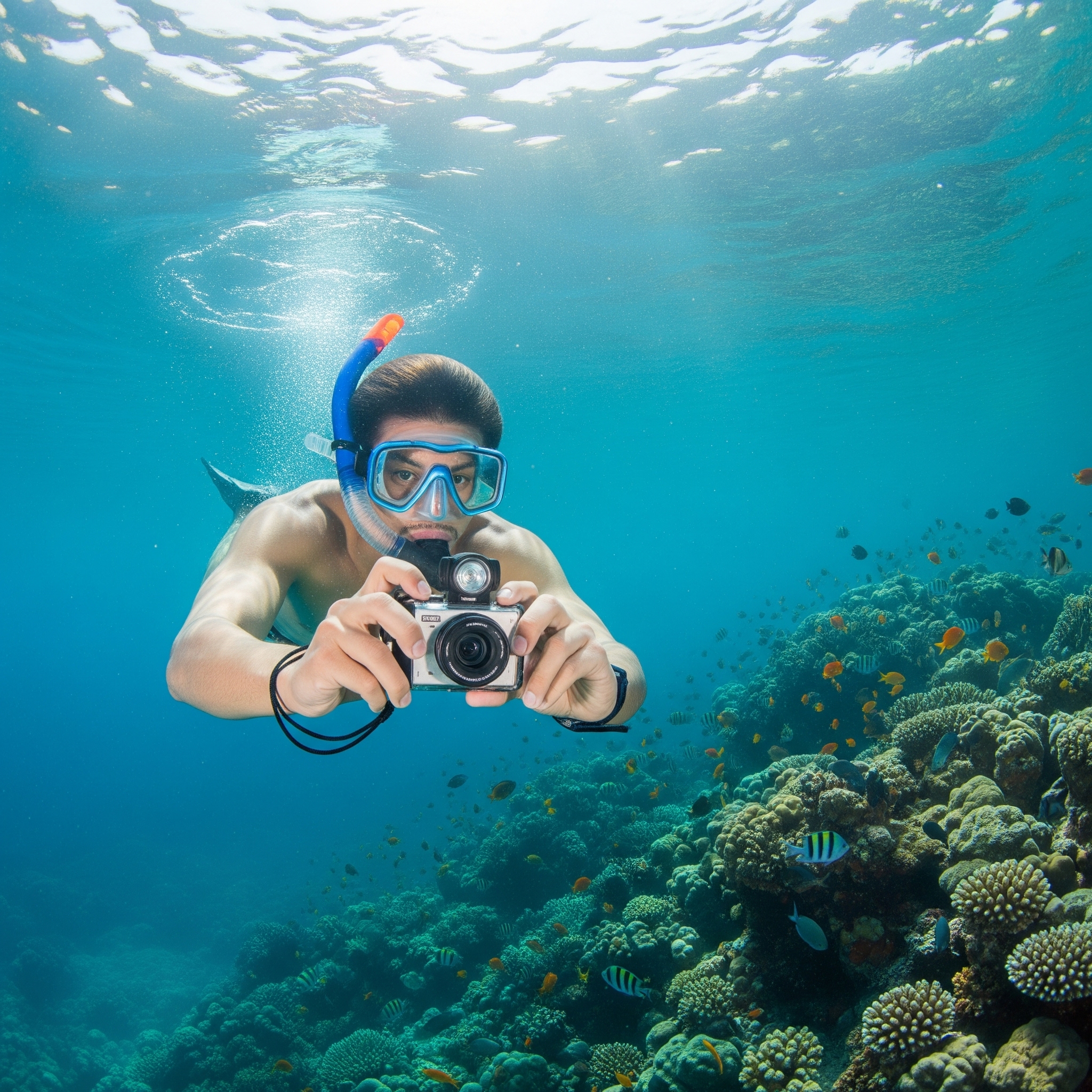
Sargassum doesn’t necessarily prevent snorkeling in Cozumel. Conditions at a specific snorkeling location may be very different from those at a beach experiencing heavy shoreline accumulation.
Cozumel is part of the Mesoamerican Reef region and is known for its coral reefs, tropical fish, and rich marine biodiversity.
Many established snorkeling areas are located along the west and southwest coasts, where exposure to incoming sargassum is typically lower.
However, seaweed isn’t the only factor that matters.
Before snorkeling, check underwater visibility, currents, waves, floating debris, and whether entry and exit conditions are safe.
Is Shore Snorkeling a Good Option During Sargassum Season?
It can be, provided conditions at the specific site are suitable.
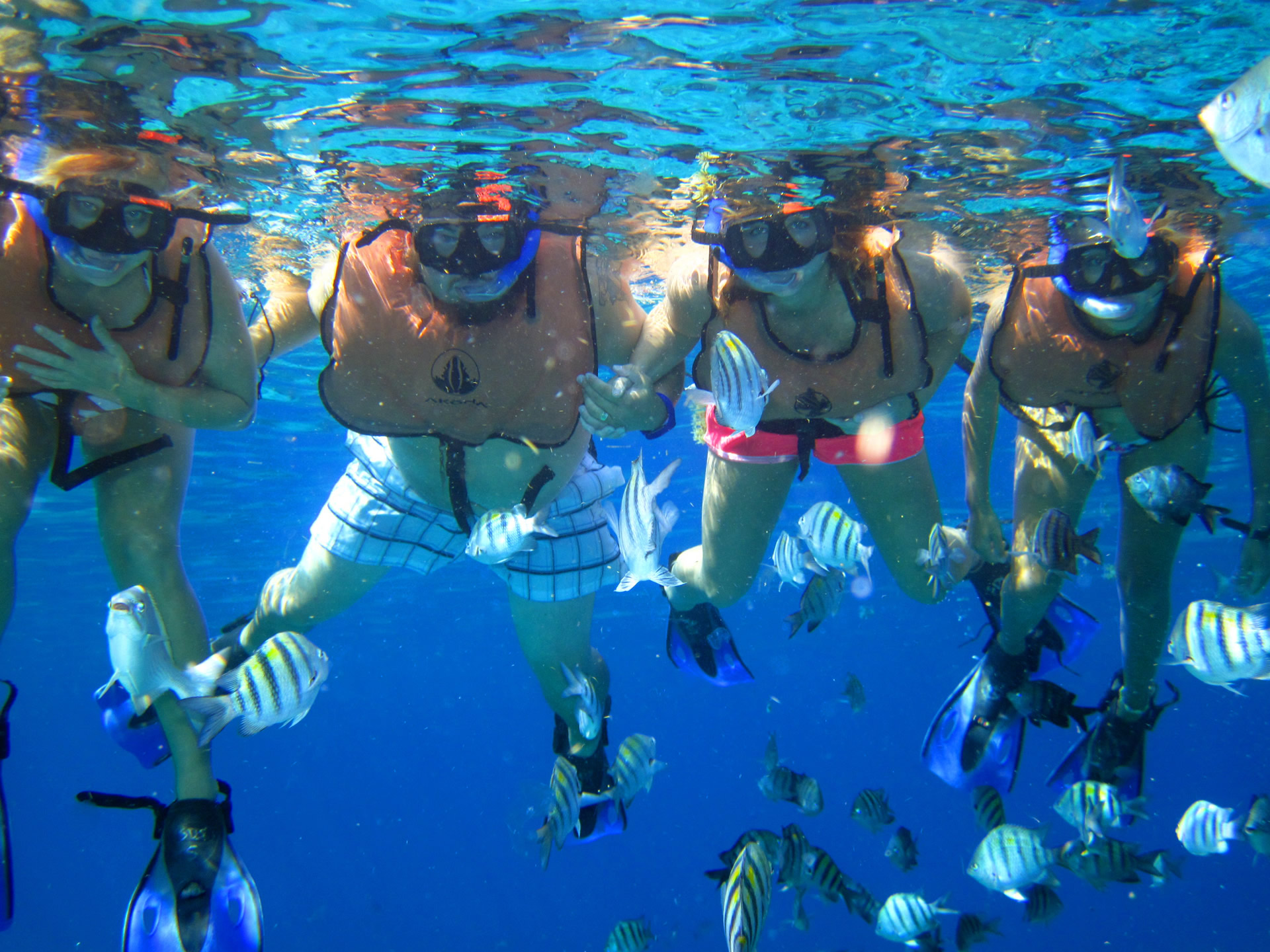
Guided shore snorkeling allows visitors to explore marine life without necessarily taking a boat to an offshore reef.
It can be especially convenient for beginners, families, and cruise passengers looking for an accessible activity.
At Sunset Cozumel, visitors can join a guided shore-snorkeling experience with instruction, equipment, and access to nearby marine life.
Because sea conditions can change, suitability should be confirmed before the activity.
Interested in snorkeling from Cozumel’s western shore? Explore our guided shore snorkeling tour and check availability for your preferred date.
Does Sargassum Affect Scuba Diving in Cozumel?
Heavy sargassum on a beach doesn’t automatically mean poor diving conditions at Cozumel’s offshore reefs.
Popular dive areas such as Palancar Reef, Columbia Reef, and Paradise Reef may have different conditions from an exposed eastern beach.
For divers, important considerations include:
- Underwater visibility.
- Current strength.
- Surface waves and wind.
- Boat access and local restrictions.
- Floating material near the dive site.
Dense sargassum can occasionally interfere with surface operations, but the presence of seaweed onshore doesn’t establish underwater reef conditions.
Always follow the assessment of a qualified dive operator.
Travelers interested in exploring Cozumel’s underwater world can also browse Sunset Cozumel’s diving and water activities.
Is Cozumel Better Than Playa del Carmen or Tulum for Avoiding Sargassum?
Cozumel can offer a useful alternative when exposed beaches along the Riviera Maya are experiencing significant sargassum.
Destinations such as Playa del Carmen, Tulum, and Puerto Morelos have stretches of coastline facing the Caribbean, where floating seaweed can wash ashore.
Cozumel also has an exposed eastern coast, but its western shoreline faces the Yucatán mainland and is generally more sheltered.
This difference gives travelers another option without having to travel far from the Riviera Maya.
However, Cozumel isn’t always clearer than every mainland destination.
Actual conditions depend on the beach, weather, and location of floating sargassum mats.
Can You Avoid Sargassum With a Cozumel Day Trip?
Yes. If significant seaweed is affecting your beach in Playa del Carmen, a day trip to Cozumel’s west coast may be worthwhile.
Before traveling, confirm the latest conditions at the beach or activity you plan to visit.
Also check ferry operations, transportation from the Cozumel ferry terminal, and beach-club availability.
For cruise passengers or travelers with limited time, selecting a specific destination in advance is particularly useful.
How to Check Sargassum Conditions in Cozumel Today
The most reliable way to assess current conditions is to combine regional scientific monitoring with recent local observations.
Satellite forecasts help identify floating sargassum offshore, but they don’t confirm the exact amount of seaweed on an individual beach.
Official Cozumel Sargassum Maps and Reports
University of South Florida (USF)
The USF Sargassum Watch System monitors floating sargassum using satellite observations and publishes monthly scientific outlooks.
It’s one of the most useful sources for understanding seasonal changes and regional abundance.
Mexican Navy (SEMAR)
Mexico’s Secretaría de Marina publishes sargassum monitoring bulletins for the Mexican Caribbean.
Check the SEMAR monitoring bulletin archive for the latest available reports.
NOAA
NOAA provides sargassum inundation-risk information to help assess the likelihood of floating seaweed approaching coastal areas.
The product was upgraded in April 2026 to provide daily updates.
How to Check Sargassum at a Specific Cozumel Beach
Before heading out, follow three simple steps:
- Check regional monitoring. Review the most recent USF, SEMAR, or NOAA information to understand the wider sargassum situation.
- Look for recent beach observations. Use dated photographs, webcams, or reports that identify the actual beach.
- Confirm locally. Contact your hotel, beach club, snorkeling guide, or dive operator about conditions that day.
When reading beach reports, pay attention to the observation date rather than just the website’s refresh time.
A report marked minimal, moderate, or abundant may also use a different classification system from another source.
For that reason, multiple recent sources are more useful than relying on a single beach-status label.
What is Sargassum Seaweed?
Sargassum is a naturally floating brown macroalgae found in tropical and subtropical Atlantic waters.
Unlike seaweed that grows attached to the seabed, floating sargassum forms mats that can travel considerable distances with ocean currents.
In the open ocean, these mats provide important habitat and shelter for fish, crabs, shrimp, sea turtles, and other marine organisms.
According to NOAA, sargassum is a valuable part of the marine ecosystem.
Problems arise when unusually large quantities wash ashore.
Heavy accumulations can obstruct beach access, interfere with tourism and recreation, and affect nearshore marine habitats.
Large recurring sargassum events have affected the Caribbean since 2011. Scientists continue studying the influence of nutrient availability, ocean circulation, and environmental variability on these blooms.
Why was Sargassum So Severe in 2026?
The 2026 season saw unusually high regional sargassum amounts.
USF’s July 31 outlook indicated that 2026 was on track to become the second-largest sargassum year in its satellite record, behind 2025.
The Gulf region also recorded exceptionally high July levels.
Although amounts declined during August and September, the September 30 outlook showed that several regions remained above historical September levels.
These statistics help explain why sargassum received considerable attention throughout 2026.
However, regional quantities describe an enormous area of ocean. They don’t establish conditions at individual Cozumel beaches.
Is Sargassum Harmful to Humans?
Floating sargassum is a natural part of the ocean environment, but large piles decomposing on beaches can create health concerns.
As stranded sargassum breaks down, it can release hydrogen sulfide, a gas associated with a rotten-egg smell.
Heavy decomposing accumulations may cause eye, throat, or respiratory irritation, particularly among people with asthma or other breathing sensitivities.
If you encounter extensive decaying seaweed and a strong odor, avoid remaining close to the accumulation.
Don’t enter water with dense decomposing material, poor visibility, or unsafe conditions, and follow local public-health guidance.
How to Avoid Sargassum During Your Cozumel Vacation
Sargassum is worth considering when planning your trip, but it doesn’t need to determine your entire vacation.
The most useful approach is to choose your location carefully, check current conditions, and keep your itinerary flexible.
Choose Your Beach Location First
If snorkeling, swimming, and waterfront relaxation are priorities, start by looking at Cozumel’s west or southwest coast.
Consider the type of shoreline, available facilities, nearby activities, and recent marine conditions.
Remember that not every waterfront hotel or beach club has a traditional sandy swimming beach.
Have an Alternative Plan
If significant sargassum affects your intended beach, check whether another location has better conditions.
When rough seas or strong currents make water activities unsuitable, consider sightseeing, dining, shopping, or exploring Cozumel’s natural and cultural attractions instead.
For visitors on a short trip, confirming your preferred activity before traveling can save valuable time.
Ask About Conditions Before Booking
Before reserving a snorkeling tour, diving excursion, or beach activity, ask the operator about current suitability and any weather-related restrictions.
This is particularly useful during active sargassum months or after unusual weather.
At Sunset Cozumel, visitors can combine waterfront dining with guided snorkeling and other marine activities along the western coast.
Browse our available water activities or contact Sunset Cozumel to discuss your plans.
Cozumel Sargassum FAQs
Which beaches in Cozumel usually have the least sargassum?
Playa Palancar, Chankanaab, and Playa San Francisco are commonly lower-exposure options because they’re located along the west or southwest coast. No beach is guaranteed to remain completely clear.
Which side of Cozumel gets the most sargassum?
The eastern coastline generally receives more sargassum because it faces the open Caribbean Sea. Winds, waves, and currents can transport floating seaweed toward this shore.
What are the worst months for sargassum in Cozumel?
Late spring and summer generally have the highest potential for sargassum, especially May through August. Actual peak timing varies from year to year.
Does Cozumel have sargassum in November or December?
Sargassum can occur during both months, but regional abundance is usually lower than during the summer. November and December are generally more favorable for travelers hoping to minimize seaweed exposure.
Is it safe to swim in Cozumel during sargassum season?
Swimming may be suitable at beaches with acceptable water quality, visibility, waves, and currents. Avoid heavy decomposing accumulations and follow local marine safety guidance.
Can you snorkel in Cozumel when there is sargassum?
Yes, snorkeling can still be possible at suitable locations, particularly along the more sheltered western coastline. Check underwater visibility, currents, and local operator advice before entering the water.
Can you visit Cozumel to escape sargassum in Playa del Carmen?
Yes, Cozumel’s western coastline can offer a lower-exposure alternative when parts of Playa del Carmen are affected. However, compare current beach reports and ferry conditions before arranging a day trip.
Should I cancel my Cozumel trip because of sargassum?
Not based solely on a regional sargassum forecast. Cozumel’s beaches can experience different conditions on the same day. Check your intended location and keep suitable alternatives available.
Is Cozumel Still Worth Visiting During Sargassum Season?
Absolutely. Sargassum is a genuine seasonal concern, but it doesn’t affect every part of Cozumel equally.
The island’s geography gives visitors a useful advantage: its western coastline is generally more sheltered from incoming sargassum than the exposed eastern shore.
The latest October 2026 reports also show why location matters. While several west-coast beaches had minimal seaweed, some eastern locations continued to experience noticeable accumulation.
For the best experience, check recent beach reports, choose a location suited to your activities, and remain flexible when marine conditions change.
Ready to explore Cozumel’s underwater world?
Sunset Cozumel offers guided shore snorkeling, waterfront dining, and other marine experiences along the island’s western coast.
Explore our guided Cozumel shore-snorkeling experience or contact us to plan your visit.
Sources Referenced:
- University of South Florida – Sargassum Watch System
- USF September 30, 2026 Sargassum Outlook, published by CARICOOS
- Municipality of Cozumel – July 19, 2026 Chen Río Cleanup
- October 9, 2026 Riviera Maya and Cozumel Monitoring Report
- Playa Punta Morena Sargassum Observations
- Playa Ixpalbarco – Sargassum Observations
- NOAA – What Is Sargassum?
- Mexican Navy – Sargassum Monitoring Bulletins