Is Cozumel water warm enough to swim year-round?
Yes. Cozumel’s sea surface temperature stays between 25°C (77°F) and 29°C (84°F) throughout the year. That narrow 4°C annual variation keeps the water within the recreational comfort range in every season.
For context:
- Below 22°C (72°F) → feels cold for most swimmers
- 25–29°C (77–84°F) → comfortable for swimming, snorkeling, and diving
- 28°C+ (82°F+) → very warm surface conditions
According to regional Caribbean data, the broader Caribbean Sea averages around 27–28°C (81°F) annually, which explains why Cozumel remains consistently warm compared to many other coastal destinations.
This year-round stability is one reason travelers plan water activities in any month without worrying about cold conditions. If you’re comparing air and rainfall patterns alongside ocean conditions, see Cozumel weather by month for a full climate breakdown.
Cozumel Water Temperature by Month
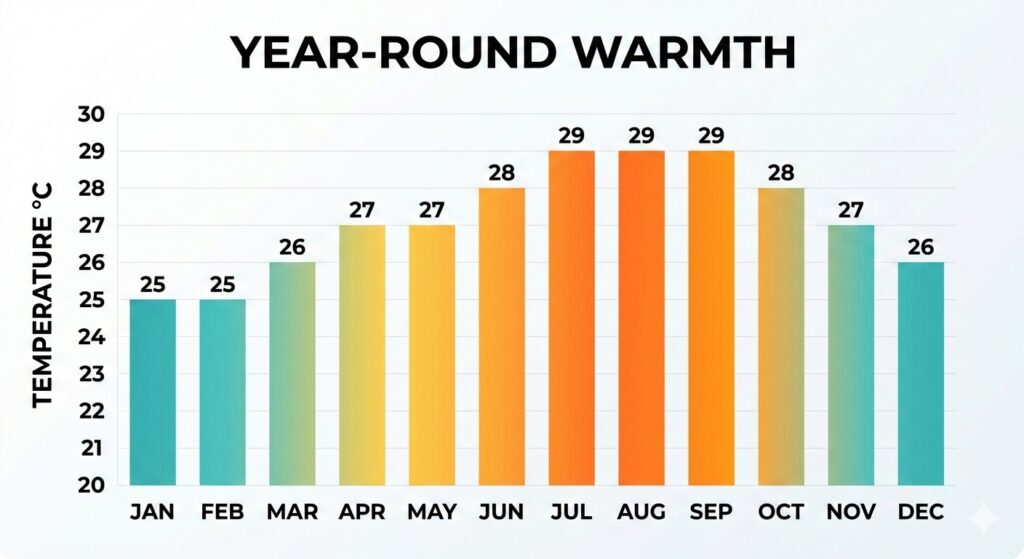
Monthly sea surface temperature averages showing Cozumel’s narrow 4-degree variation.
(Table Overview)
| Month | Avg °C | Avg °F | Swimming Comfort | Snorkeling | Beginner Friendly? |
| January | 25–26°C | 77–79°F | Comfortable | Good | Yes |
| February | 25°C | 77°F | Comfortable | Good | Yes |
| March | 26°C | 79°F | Very comfortable | Very good | Yes |
| April | 26–27°C | 79–81°F | Very comfortable | Excellent | Yes |
| May | 27°C | 81°F | Warm | Excellent | Yes |
| June | 28°C | 82–83°F | Warm | Excellent | Ideal |
| July | 28–29°C | 83–84°F | Very warm | Excellent | Ideal |
| August | 29°C | 84°F | Very warm | Excellent | Ideal |
| September | 28–29°C | 83–84°F | Very warm | Very good | Ideal |
| October | 28°C | 82–83°F | Warm | Very good | Yes |
| November | 27°C | 81°F | Warm | Very good | Yes |
| December | 26°C | 79°F | Comfortable | Good | Yes |
Warmest months: July–September
Coolest months: January–February
Even in winter, temperatures rarely drop below 25°C, which keeps swimming and snorkeling comfortable without heavy thermal protection.
Now let’s look at why Cozumel’s ocean remains this stable.
Why Does Cozumel’s Sea Temperature Remain Stable?
Cozumel sits in the Western Caribbean Sea along the Mesoamerican Reef System, the second-largest reef system in the world. Several geographic and oceanographic factors maintain its thermal stability:
- Tropical latitude near the equator
- Warm Caribbean currents
- Reef structure that moderates coastal temperature swings
- Minimal annual variation compared to subtropical destinations
Regional sea data shows that much of the Caribbean maintains average surface temperatures around 27–28°C (81°F). Cozumel mirrors this pattern, fluctuating only about 4°C between the coolest and warmest months.
This consistency supports:
- Year-round marine biodiversity
- Stable visibility conditions
- Predictable snorkeling and diving comfort
Because warm water supports coral ecosystems, thermal stability also plays a role in reef health. However, global monitoring shows that prolonged exposure above 30–31°C (86–88°F) increases coral bleaching risk. Even during peak summer, Cozumel’s monthly averages typically remain below that extended stress threshold.
If you’re interested in how reef systems are protected locally, explore ongoing coral restoration efforts in Cozumel.
Next, let’s break temperatures down by season to understand what each period feels like in the water.
Cozumel Water Temperature by Season
Although monthly averages vary slightly, seasonal patterns help travelers understand what conditions actually feel like in the water.
Winter Water Temperature in Cozumel (December–March)
Average: 25–26°C (77–79°F)
Winter marks the coolest ocean temperatures of the year — but “cool” in Cozumel still means comfortable.
What it feels like:
- Refreshing at entry, then fully comfortable
- Ideal for extended swims
- Comfortable for snorkeling without heavy gear
For divers:
- A 3mm wetsuit is recommended for longer dives
- Excellent underwater visibility is common during this season
Because air temperatures are also mild, winter is popular with travelers comparing overall conditions in guides like best time to visit Cozumel.
Transitioning from winter, temperatures begin to rise gradually into spring.
Spring Water Temperature in Cozumel (April–May)
Average: 26–27°C (79–81°F)
Spring offers slightly warmer surface conditions with generally calm seas.
Why many travelers prefer spring:
- Water feels warm immediately upon entry
- Minimal thermal protection required
- Comfortable for beginners and families
- Often steady visibility conditions
Spring represents a balance: fewer extreme heat days than late summer and warmer water than winter. From here, Cozumel reaches peak warmth.
Summer Water Temperature in Cozumel (June–September)
Average: 28–29°C (82–84°F)
Summer is the warmest water period of the year.
Surface experience:
- Very warm swimming conditions
- Rash guard typically sufficient
- Minimal cold shock when entering
For snorkelers:
- Extended surface swimming is comfortable
- Ideal for first-time participants
- Warmth reduces anxiety for beginners
Summer warmth remains below sustained coral stress levels of 30–31°C, but seasonal monitoring is important globally as coral reefs face increasing heat exposure.
Recent global assessments indicate that over 80% of the world’s coral reef areas have experienced bleaching-level heat stress since 2023, highlighting the importance of local reef management and monitoring. [source]
For travelers comparing dive and snorkel conditions, see best snorkeling in Cozumel for site-specific recommendations.
After peak summer warmth, temperatures begin a gradual seasonal adjustment.
Fall Water Temperature in Cozumel (October–November)
Average: 26–28°C (79–82°F)
Fall remains warm, though slight cooling begins.
What to expect:
- Comfortable swimming
- Still warm enough for minimal protection
- Transitional visibility depending on seasonal weather
Because fall overlaps with tropical weather patterns, some travelers also review hurricane season in Cozumel when planning.
Across all four seasons, the key takeaway remains consistent:
Cozumel does not experience extreme seasonal temperature swings. The difference between winter and summer feels moderate rather than dramatic.
Now that we’ve covered seasonal patterns, the next question most travelers ask is practical:
Is Cozumel water truly warm enough for swimming, snorkeling, and scuba diving year-round?
Is Cozumel Water Warm Enough for Swimming, Snorkeling, and Diving?
Yes. Cozumel water remains within the comfort range all year, rarely dropping below 25°C (77°F). That makes it consistently suitable for swimming, snorkeling, and scuba diving without heavy thermal gear.
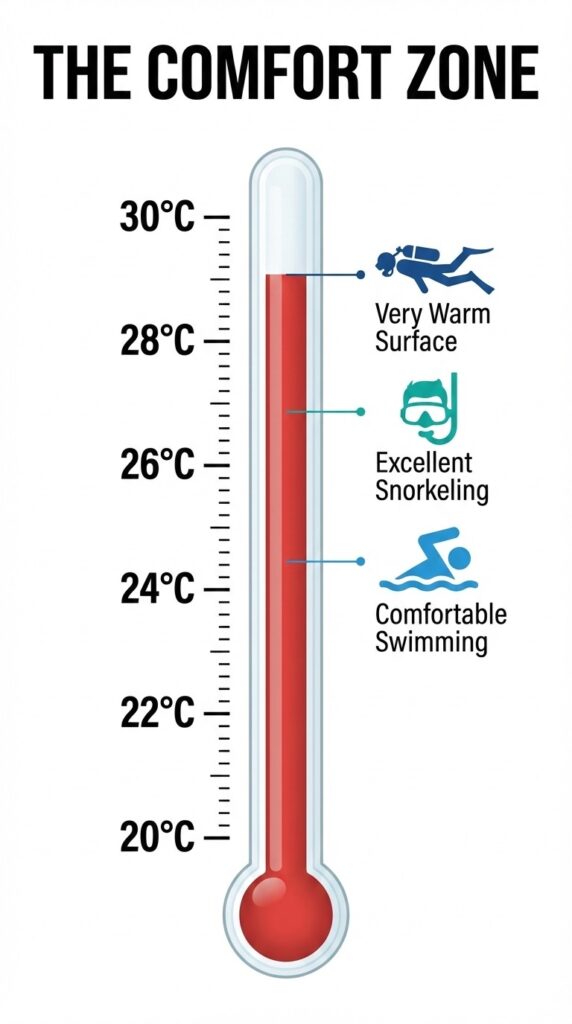
For perspective:
- 25°C (77°F) → Comfortable for most swimmers
- 26–29°C (79–84°F) → Warm and ideal for surface activities
- 28°C+ (82°F+) → Very warm, minimal exposure protection needed
Because the broader Caribbean averages around 27–28°C (81°F) annually, Cozumel follows a stable tropical pattern rather than a seasonal cold–warm cycle seen in subtropical regions.
Is Cozumel Water Comfortable for Swimming?
Yes, every month. Even in January and February, the water stays warmer than many U.S. coastal destinations in peak summer.
Why this matters:
- No cold shock entry
- Comfortable floating and shore swimming
- Suitable for families with children
- Easy to combine with beach club visits
If you’re planning a short island visit, especially from a cruise stop, you can confidently include swimming in your itinerary. For port logistics and docking locations, see Cozumel cruise ports
Is Cozumel Water Good for Snorkeling Year-Round?
Optimal snorkeling range: 26–29°C (79–84°F)
Cozumel sits along the Mesoamerican Reef System, which supports shallow coral ecosystems accessible directly from shore in many west-coast areas.
Snorkeling comfort factors:
- Warm surface temperatures year-round
- Minimal wetsuit requirements
- Calm leeward waters on the island’s west side
- Good buoyancy comfort in warm water
Warm water reduces tension for first-time snorkelers and allows longer surface time without fatigue. For safety considerations before entering the water, review Cozumel snorkeling safety.
If you prefer guided entry points, a guided shore snorkel experience provides structured instruction and reef orientation.
Is Cozumel Water Good for Scuba Diving?
Ideal diving range: 25–28°C (77–82°F)
Cozumel is internationally recognized for reef diving, with sites such as Palancar and Colombia benefiting from stable tropical temperatures.
Diving comfort insights:
- 3mm wetsuit recommended in winter for extended dives
- Shorty wetsuit or rash guard sufficient in summer
- Deeper sites may be 1–2°C cooler
- Occasional thermoclines during summer months
For travelers comparing entry-level experiences with certification pathways, see snorkeling vs scuba diving.
Those without certification can consider a discover scuba experience, which operates comfortably year-round due to consistent water temperatures.
Key Takeaway
Cozumel’s water does not fluctuate enough to create a “bad season” for ocean activities. Instead, it maintains a narrow and reliable temperature band that supports:
- Year-round swimming
- Beginner-friendly snorkeling
- Professional dive conditions
- Cruise-friendly half-day excursions
Next, let’s examine how water temperature influences marine life and coral reef health around Cozumel.
How Water Temperature Affects Coral Reefs and Marine Life in Cozumel?
Cozumel lies along the Mesoamerican Reef System, the second-largest reef system in the world. Warm, stable sea temperatures are one of the reasons this ecosystem supports year-round marine biodiversity.
Why Stable Temperatures Matter for Coral reefs?
Coral reefs thrive within a relatively narrow thermal window.
- Optimal coral growth range: ~23–29°C (73–84°F)
- Heat stress threshold: Prolonged exposure above 30–31°C (86–88°F)
- Sustained overheating can trigger coral bleaching
Even during peak summer, Cozumel’s monthly averages typically stay within 28–29°C (82–84°F) — below long-term bleaching thresholds under normal seasonal conditions.
How Warm water Impacts Snorkeling and Diving Conditions in Cozumel?
Warm water affects more than just comfort — it shapes the entire underwater experience.
1. Visibility
Stable temperature layers reduce turbulent mixing, often supporting:
- Clearer surface conditions
- Predictable thermoclines
- Healthy coral ecosystems that attract fish populations
2. Marine Biodiversity
Consistent warmth allows:
- Year-round tropical fish activity
- Coral spawning cycles
- Stable reef habitats
3. Reef Protection Measures
Because coral health is temperature-sensitive, protective practices are enforced in many areas around Cozumel:
- Sunscreen restrictions in marine environments
- Marine park permit regulations
- Guided reef access in protected zones
For travelers interested in conservation-focused experiences, explore eco-friendly snorkeling practices to understand how visitor behavior impacts reef stability.
Those who want hands-on environmental experience can also learn about the local reef restoration tour, where marine education and coral transplant programs are part of the activity.
What This Means for Visitors
Cozumel’s water temperature supports:
- Comfortable human activity
- Stable marine biodiversity
- Reef ecosystems that remain active in all seasons
Because ocean warmth and coral health are closely linked, understanding seasonal water patterns helps travelers choose the right month not only for comfort — but also for reef visibility and marine life encounters.
Next, let’s look specifically at how these stable water temperatures benefit cruise passengers and short-stay visitors.
How Water Temperature Impacts Cruise Passengers and Short-Stay Visitors
Cruise visitors typically have 3–6 hours on the island. That limited window makes predictable water conditions especially important.
Are the Waters Comfortable When Cruise Ships Dock?
Yes. Cozumel’s sea temperature remains in the 25–29°C (77–84°F) range year-round, meaning:
- No sudden cold-water shock
- Comfortable entry even without a wetsuit
- Minimal preparation required for short excursions
Because cruise arrivals happen in all seasons, stable water temperature ensures snorkeling and swimming are viable regardless of the month.
For port logistics and docking details, see Cozumel cruise ports.
Why Warm Water Matters for Half-Day Excursions
Cruise-based activities are typically short:
- 45–90 minutes of snorkeling
- 1–2 tank introductory dives
- 2–3 hour guided marine experiences
In cooler destinations, short excursions can feel rushed due to thermal discomfort. In Cozumel:
- Warm water reduces physical stress
- Beginners feel more relaxed
- Families with children stay comfortable longer
- Surface swimming remains enjoyable without heavy gear
This makes warm-water snorkeling particularly suitable for cruise visitors comparing independent tours and Cozumel shore excursions.
Is It Suitable for First-Time Snorkelers from Cruise Ships?
Yes. Warm water provides:
- Greater buoyancy comfort
- Reduced anxiety during initial immersion
- Less fatigue during surface swimming
Because the island’s west coast is naturally calmer, many shore-entry areas allow easy reef access without long boat transfers — ideal for time-sensitive visitors.
Key Takeaway for Cruise Travelers
Cozumel’s narrow temperature range removes one major variable from excursion planning.
You don’t need to time your visit around ocean warmth. Instead, you can choose activities based on:
- Visibility preferences
- Crowd levels
- Seasonal weather
- Personal experience level
Now let’s answer a common planning question: Which months are best depending on your travel style — beginner, diver, family, or photographer?
Best Month to Visit Cozumel Based on Your Travel Style
Water temperature remains warm year-round, but certain months may align better with your goals, experience level, or travel plans.
Best Months for First-Time Snorkelers
May–September (27–29°C / 81–84°F)
- Warmest surface temperatures
- Minimal exposure protection required
- Comfortable for extended floating and reef viewing
- Reduced cold sensitivity for beginners
If you’re new to snorkeling and want calm entry conditions, this period offers the warmest and most relaxed surface experience. For additional preparation, review Cozumel snorkeling safety before entering the water.
Best Months for Certified Divers
December–April (25–27°C / 77–81°F)
- Slightly cooler water improves thermal layering stability
- Often excellent visibility conditions
- Comfortable with a light 3mm wetsuit
- Fewer extreme heat days at the surface
Divers comparing sites can explore seasonal differences in best scuba diving in Cozumel.
Best Months for Families with Kids
March–August (26–29°C / 79–84°F)
- Warm, predictable water
- Low thermal discomfort for children
- Comfortable short-duration snorkeling
- Easy shore-entry swimming
Families planning structured day activities can also browse things to do in Cozumel with kids for additional options.
Best Months for Underwater Photography
Winter through Early Spring (Dec–April)
- Often stable visibility
- Reduced plankton density in certain periods
- Slightly cooler water layers that can enhance clarity
Photographers preparing for reef conditions may benefit from reviewing underwater photography tips for snorkeling.
Best Months for Cruise Passengers
Year-round suitability
Because water stays above 25°C even in winter:
- No “cold season” to avoid
- Comfortable half-day excursions
- Minimal preparation needed
- Reliable swimming conditions in any docking month
This consistency allows cruise travelers to focus on itinerary planning rather than temperature concerns.
Overall Recommendation
There is no single “bad” month for ocean conditions in Cozumel. Instead:
- Choose summer for maximum warmth
- Choose winter for balanced air temperatures and steady conditions
- Choose shoulder seasons for fewer crowds
Next, let’s compare Cozumel’s water temperature with nearby destinations like Cancun and Playa del Carmen to understand how it differs regionally.
How Cozumel’s Water Temperature Compares to Cancun and Playa del Carmen?
Travelers often compare Cozumel with nearby mainland destinations before booking. While all three sit in the Caribbean region, small geographic differences influence water conditions.
Cozumel vs Cancun: Sea Temperature Differences
Both destinations share the same regional Caribbean current system, which keeps temperatures within a similar tropical range:
- Winter: ~25–26°C (77–79°F)
- Summer: ~28–29°C (82–84°F)
However, Cozumel’s island location and reef-protected west coast often result in:
- More stable surface layers
- Reduced sediment movement
- Consistently warm near-shore conditions
Cancun beaches face the open Caribbean more directly, where seasonal wind patterns can create slightly more surface variability.
If you’re comparing full travel conditions beyond ocean temperature, review best time to visit Cozumel for seasonal planning insights.
Cozumel vs Playa del Carmen: Ocean Conditions Compared
Playa del Carmen shares similar temperature averages, but coastal structure differs.
Key differences:
- Playa del Carmen sits on the mainland
- Cozumel is surrounded by reef systems
- Cozumel’s west side is naturally sheltered
This means that while water temperature ranges are nearly identical, Cozumel often offers:
- More consistent reef access
- Predictable snorkeling conditions
- Stable visibility influenced by reef structure
For travelers deciding between island and mainland experiences, see best scuba diving in Mexico: Cozumel vs Cancun or Playa del Carmen.
Cozumel vs Florida: Seasonal Water Temperature Range
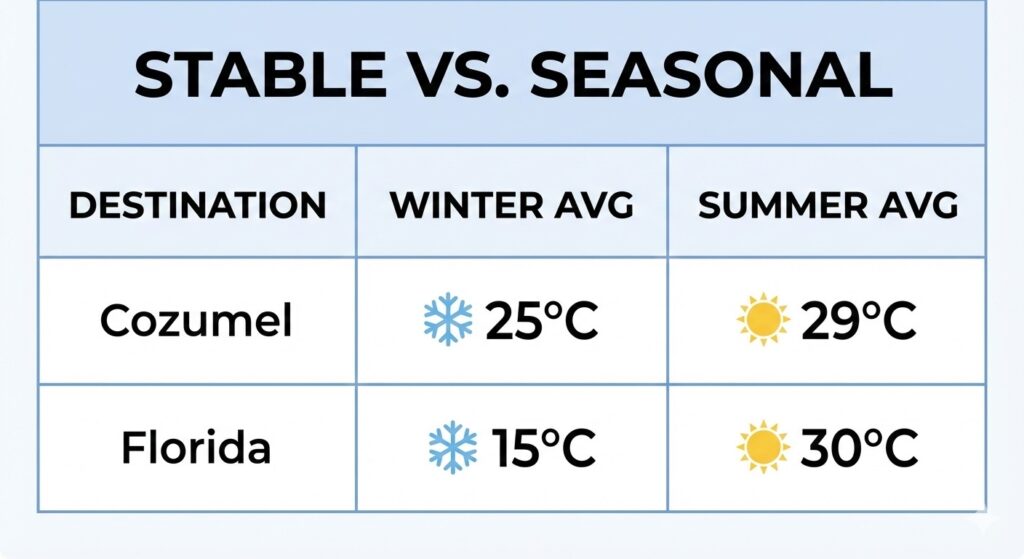
While other regions experience significant seasonal cooling, Cozumel remains in the tropical comfort zone.
This is where differences become more noticeable.
Even during winter, Cozumel averages 25°C (77°F), while many Florida coastal areas can drop into the low 60s°F (15–18°C) seasonally.
That makes Cozumel:
- More reliable for winter swimming
- Less dependent on wetsuits
- A year-round warm-water destination
Comparison – Water Temperature in Cozumel, Cancun, Playa del Carmen & Florida:
| Destination | Winter Avg | Summer Avg | Seasonal Swing |
| Cozumel | 25–26°C | 28–29°C | ~4°C |
| Cancun | 25–26°C | 28–29°C | ~4–5°C |
| Playa del Carmen | 25–26°C | 28–29°C | ~4–5°C |
| Florida (varies by region) | 15–22°C | 26–30°C | Larger seasonal range |
Conclusion:
Cozumel does not necessarily have dramatically warmer water than Cancun or Playa del Carmen — but its reef structure and sheltered west coast create highly stable and predictable warm-water conditions year-round.
Next, let’s close with a practical planning summary and answer the most common questions travelers ask about Cozumel water temperature.
Plan Your Beach, Snorkeling, and Diving Activities Around Cozumel’s Warm Water
Cozumel’s narrow annual temperature range — typically 25–29°C (77–84°F) — means water comfort rarely dictates whether you should visit. Instead, planning usually revolves around weather, crowd levels, and personal activity preference.
If Your Priority Is Warmest Water
Best window: June–September
- Peak surface warmth
- Minimal exposure protection needed
- Ideal for extended surface swimming
If You Prefer Balanced Conditions
Best window: March–May
- Warm water
- Moderate air temperatures
- Comfortable for snorkeling and diving
If You Want Stable Winter Escapes
Best window: December–February
- Cooler air but still warm ocean
- Comfortable diving with light wetsuit
- Reliable reef access
For full seasonal air and rainfall trends, see Cozumel weather by month.
Cozumel Water Temperature FAQs
Does Cozumel water temperature change by depth?
Yes. Surface water averages 25–29°C, while deeper dive sites may be 1–2°C cooler. Summer thermoclines can briefly create cooler layers at depth.
Does hurricane season make the water cold?
Temporarily. Strong storms can mix surface and deeper water, lowering temperature by 1–3°C, but levels typically return to seasonal averages within days. For broader seasonal context, review hurricane season in Cozumel.
Which side of Cozumel has warmer water?
The west coast is typically calmer and feels warmer due to reduced wind exposure and reef sheltering. Most snorkeling and diving access occurs on this side.
Is Cozumel water warmer than Cancun?
Temperature averages are similar, but Cozumel’s island reef structure often creates more stable near-shore conditions.
Do I need a wetsuit in January?
For casual swimming or snorkeling, no. For extended scuba dives, a 3mm wetsuit is recommended for thermal comfort.
Final Takeaway
Cozumel does not experience dramatic seasonal water shifts. Instead, it maintains:
- Warm tropical sea temperatures
- Comfortable swimming year-round
- Reliable snorkeling conditions
- Stable dive environments
Because ocean temperature rarely becomes a limiting factor, travelers can focus on choosing activities based on experience level and itinerary length rather than worrying about cold water.
If you’re building a one-day plan that includes reef time, beach relaxation, or guided marine activities, see what to do in Cozumel in one day for itinerary ideas.